
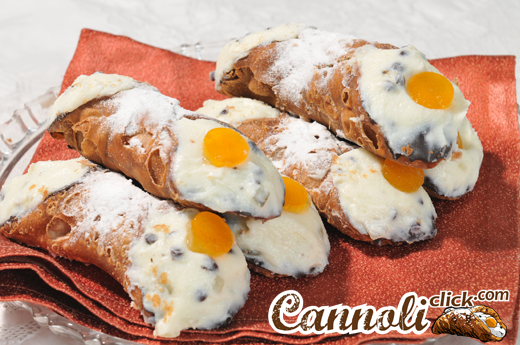
U cannolu in Sicilian villages is a small fountain gushing water, a tube-shaped tap where you can always quench your thirst. But u cannolu for the rest of the world is a magnificent dessert, rich and lavish, dark like black bread but filled with milky white, shaped like a reed but full of cream. Already known when Marcus Tullius Cicero was quaestor of Sicily, the “Tubus farinarius, dulcissimo, edulio ex lacte factus”, or “the flour tube made of milk for a very sweet food”, like many recipes of Trinacria has Saracen origins. At the time of the Arabs, in Caltanissetta – the ancient “Kalt El Nissa”, which literally, and not by chance, means “castle of women” – the concubines of an old Saracen emir spent their time, between one pastime and another, inventing delicious sweets for their lord. During one of the poor women’s very respectable culinary forays, one of them tried to imitate a typical Arab sweet filled with ricotta, almonds and honey, shaped like a banana. Great inventions are known to come from mistakes and experimental mishaps, and the cannolo was no exception. Others claim instead that the cannolo was born to the sisters of a wealthy convent, busy making Carnival sweets. Pleased with their creation of the Sicilian cassata – another dessert of Arab origin recreated in Sicily – the nuns tried to imitate a sugary sweet made of a dried flour crust filled with ricotta and candied pumpkin, and instead invented the cannolo: a “shell” of fried pastry filled with ricotta cream, strictly from sheep’s milk, enriched with “cucuzzata”, chocolate chips and crushed almonds. In short, the cannolo was born as a joke and under happy auspices. Today it is an international delicacy, and Piana degli Albanesi even holds a festival for it. But local rivalries extend even to dessert: while in Palermo the cannolo is decorated with two cherries and a piece of orange peel, in Catania it is sprinkled with chopped Bronte pistachios. Every place has its own cannolo!
Elena Beninati
Leave a Reply