
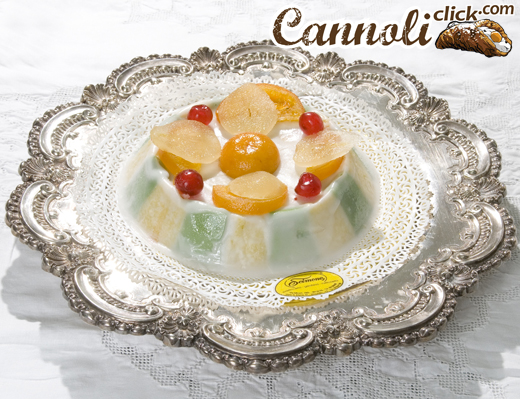
È duci come u zuccaru e chini i zuccata! It’s cassata! A tribute to a beautiful woman, rich and sensual, of ancient origins – perhaps Saracen, as tradition demands. And it is precisely to a Saracen that the lucky invention of this luscious sweet is attributed, in its first basic version made of cheese, ricotta and honey sugar. The story goes – more out of nostalgia for a legend than out of history – that a young Arab cook, busy with sugars and pots, through a mix-up rather than a language barrier, answered his Sicilian assistant, who was asking about the dessert, with the name of a small copper pan: “qas’at”. He thus unknowingly gave birth to the name cassata, since the assistant mistook the name of the pan for the dessert and vice versa. More likely, Magna Graecia already had a ricotta dessert that the Romans called caseatus , a sweet filling wrapped in a sheet of pastry to be baked, later enriched with vanilla and cane sugar. In the Middle Ages the first abbot of the abbey of San Martino delle Scale, Angelo Sinesio, describes cassata as “cibus ex pasta panis et caseus compositus”. Cassata then became an Easter dessert in 1575, thanks to the pastry-making nuns of a convent in Mazara. With its round shape the dessert recalled the circle of the sun, rising and setting in an endless cycle, and so it could be compared to the cycle of Christ’s passion, death and resurrection at every Easter. But the triumph of the cassata known to dignitaries and tourists all over the world – the sponge-cake version, full of sweet ricotta and sugar icing, with vanilla and marzipan, and covered with candied pumpkin and candied fruit like a floral arabesque – began with the Florio family around 1878. That year none other than the confectioner of the Royal House, one Salvatore Gulì, completely changed the recipe of the famous cassata: he removed the shortcrust pastry that had to be baked and replaced it with very soft sponge cake soaked in Marsala, then added a very sweet coating of egg-white icing topped with candied fruit, his speciality. To distinguish it from the baked cassata, the famous pastry chef called his invention “cassata siciliana”, although the people of Palermo insist on calling it Gulì’s cassata, in honour of its creator. Cassata had now come of age: the Florios gave it to the crowned heads of all Europe, and to this day it is the most characteristic symbol of Sicily – of that made in Sicily that can cross the ocean to bring a touch of flavour and pleasure, leaving you longing for a familiar fragrance of the South.
Elena Beninati
Leave a Reply