
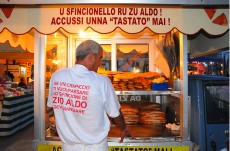
 Accattativillu, chi ciavuru! The Palermo street hawker, aboard his “Lapa”, roams the city’s dusty streets night and day. He is the street seller of sfincione and sfincionello – note the difference in the diminutive, which marks very different features of the Sicilian dish best known and loved by tourists from all over the world. A pizza that isn’t a pizza, closer to the soft “sfincia” than to the peasants’ bread and toppings. Sfincione, wonderfully soft thanks to the large amount of water that makes it fluffy, is tastier than a plate of pasta but as simple as bread. Originally it replaced the plain side dish on holidays: it was born as an alternative to bread at Christmas, then became festive food – cheap, simple and colourful; an inexpensive treat that adults and children snapped up. Born among ordinary people with few means, it was also served as the dish of honour at engagement banquets, that is, at the first “appuntamientu”, which took place at the bride-to-be’s home. Of peasant origin, handed down by the Saracens but, according to legend, “Sicilianised” by the nuns of the monastery of San Vito, sfincione keeps the structure of bread dough, but it is not simply bread with toppings. From flour, salt, water and a little yeast, 19th-century housewives created a very soft, pliable dough that, pressed with the palm of the hand and with light touches, could take any shape. Sfincione in fact comes in various sizes and thicknesses, depending on the amount of yeast and the baking, traditionally done in wood-fired ovens whose bricks give off an intense scent of wood and lemon that fills the dough with flavour and aroma. But what makes it a unique dish, hard to imitate, is the topping. Sfincione is not “pane schittu” (plain bread): it is topped with anchovies, onion, oil and cheese at the base, enriched with tuma, fresh cheese or pecorino in Bagheria, or with caciocavallo, oregano, sardines and tomato in Palermo. But the essential topping the whole world envies is the breadcrumb! It is not ready-made breadcrumbs: it comes straight from the bread, rubbed between the hands from inside large stale loaves called “vastidduna pi’ sfinciuna”. It makes it soft and fluffy, gives it a whiteness that is hard to imitate and leaves the imprint of a truly Mediterranean taste.
Elena Beninati
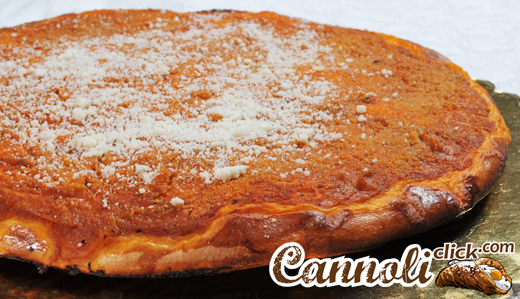
The Sfincione from Palermo is just a click away on Cannoli.online and will be shipped the day after your online order in special packaging for air transport. (Don Leo)
Leave a Reply